Inside Solitude: Ireland's Enduring Football Cradle
Nestled in north Belfast, Northern Ireland, lies a football ground that stands as a testament to the sport's deep roots and unwavering spirit: Solitude. Home to Cliftonville Football Club, Ireland's oldest football club, Solitude holds the prestigious title of being the oldest football stadium in Ireland. More than just a venue for matches, this historic ground is a living chronicle of Irish football, having witnessed pioneering moments, dramatic contests, and the resilience of a community through changing times. For anyone interested in the heart and soul of Irish football, exploring Solitude is a journey into history itself.
Opened in 1890, Solitude quickly established itself as a significant sporting landmark. Cliftonville FC, having moved across the road from their previous home on Oldpark Avenue, found a permanent residence that would become synonymous with their identity. The original layout boasted two pitches, underscoring the club's ambition and the burgeoning popularity of football in the late 19th century. One of Solitude's most notable early distinctions was hosting the first-ever penalty kick in international football, a moment that forever etched its name into the sport's global history books. This groundbreaking event is just one example of how this venerable ground has been at the forefront of footballing evolution.
For a significant period in the 1890s and early 1900s, Solitude was the undisputed home ground of the Ireland national team, succeeding the Ulster Cricket Ground at Ballynafeigh. During this era, it proudly hosted eleven home internationals, drawing crowds and fostering national pride. A particularly memorable occasion came on 3 March 1894, when Ireland, after thirteen previous attempts, finally secured a remarkable 2-2 draw against footballing giants England at Solitude. While it was eventually superseded by Windsor Park and Dalymount Park as the primary national stadium, Solitude's legacy as a foundational pillar of international football in Ireland remains unchallenged. Its enduring presence makes it a truly unique site for Solitude: Ireland's Oldest Football Stadium and Key Moments.
From Victorian Charm to Modern Comfort: Solitude's Iconic Stands
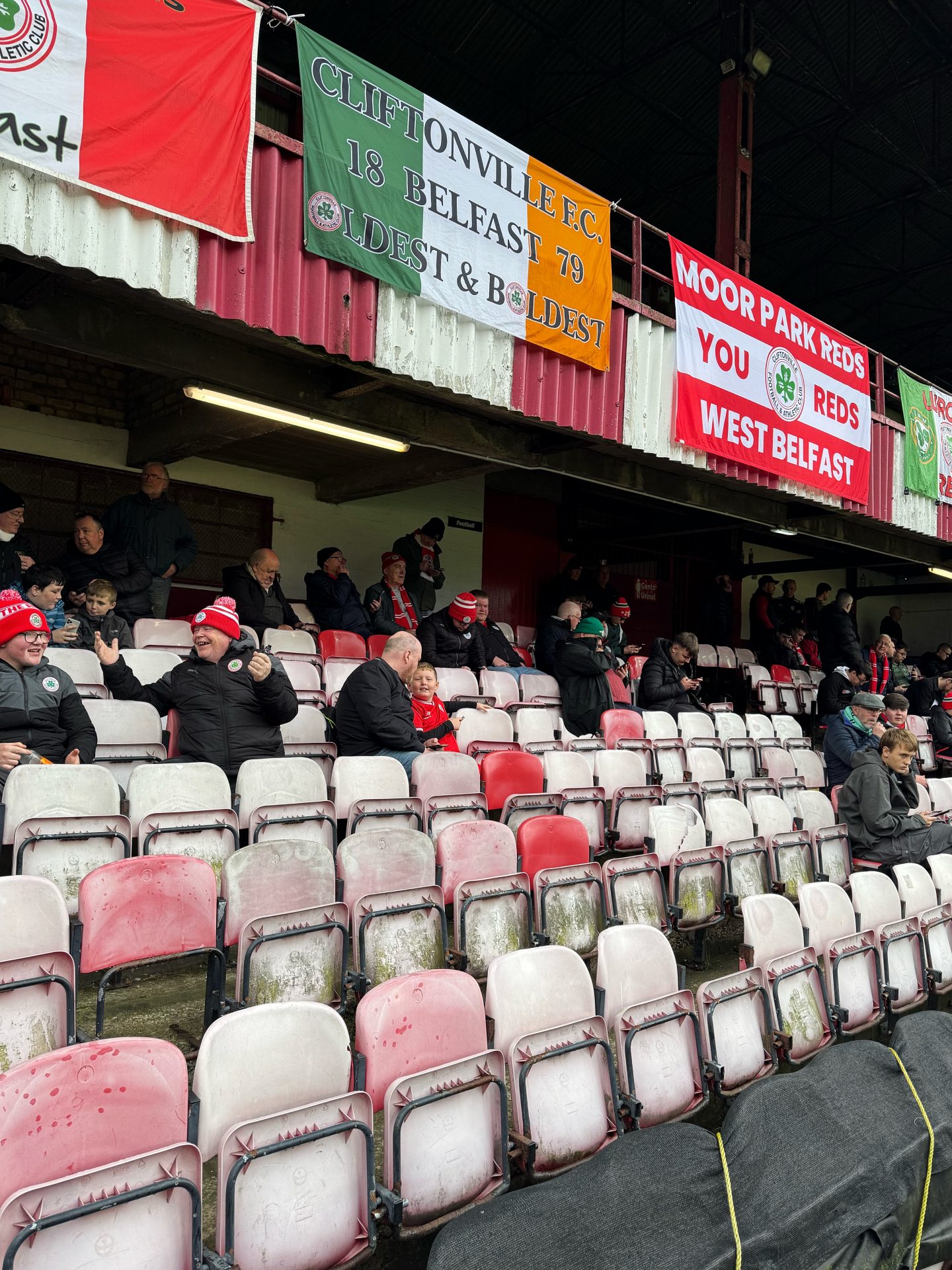
Solitude's capacity today stands at 6,224, though safety legislation currently restricts attendance to 2,530, reflecting a cautious balance between preserving heritage and ensuring modern safety standards. The stadium's stands tell a story of constant evolution, marked by periods of renovation and adaptation.
The Main Stand, situated on the western side of the ground, is a structure steeped in history, originally built in the 1950s after a devastating fire in January 1949 destroyed its predecessor. That original stand was tragically lost after an Irish Cup tie between Linfield and Glentoran. The replacement Main Stand, a two-tiered structure for Cliftonville supporters, featured a mix of terracing, seating, and benches. While it has long been a focal point for home fans, it is now an old structure and is currently closed. Within its venerable walls, the club's social club – a licensed premises – has historically served as a vital community hub, fostering camaraderie among supporters beyond match days.
Contrastingly, the more recent developments showcase a commitment to modern facilities. The old "Cage Stand" was demolished to make way for the impressive McAlery Stand. Opened on 27 October 2008, this stand boasts 1,600 seats and is a testament to the club's vision for the future. Named in honour of the club's founder, it houses state-of-the-art facilities, including modern dressing rooms, significantly enhancing the match-day experience for players and staff alike. On the north side of the ground lies the Away End, affectionately known as "The Bowling Green End" due to the adjacent bowling green, providing a dedicated space for visiting supporters.
Further renovations include a new stand built in 2002 at one end specifically for away supporters, and in 2008, another new stand was completed behind the goal at the east end. These strategic additions illustrate a continuous effort to improve infrastructure and accommodate the growing demands of modern football.
The Heart of the Game: Solitude's Pioneering Pitch and Facilities
Perhaps one of the most significant modern transformations at Solitude was the installation of a synthetic 3G pitch in 2010. This marked a major departure from the traditional grass surface and brought solitude football firmly into the 21st century. The move to a 3G pitch offers numerous advantages, including greater durability, consistent playing conditions regardless of weather, and significantly reduced maintenance costs. Crucially, it also allows for much greater community usage, transforming the ground into a resource for local teams and organisations beyond Cliftonville's senior fixtures.
The embrace of artificial turf reflects a pragmatic approach to operating an historic ground in a modern league. It ensures that fixtures are rarely postponed due to waterlogged pitches, providing reliability for fans and broadcasters. For players, it means a fast, true surface that encourages a flowing style of play. This blend of historic surroundings with cutting-edge playing technology creates a unique atmosphere at Solitude, where the echoes of the past meet the dynamism of contemporary football.
Practical Insight for Visitors: While the Main Stand is closed, the modern McAlery Stand offers excellent viewing and facilities. For those attending a game, arriving early allows you to soak in the atmosphere of this storied ground. Given its urban location, public transport is often the most convenient way to reach Solitude.
Solitude Through Turmoil: Football's Unyielding Spirit in Belfast
Solitude's story is inextricably linked with the broader history of Belfast and Northern Ireland, particularly during the tumultuous period known as The Troubles. The raw and compelling account of Cliftonville's Solitude: Football's Journey Through The Troubles offers a poignant insight into how the club and its ground navigated decades of conflict. For nearly thirty years, Cliftonville was forced to play its high-stakes Belfast derbies against Linfield FC away from Solitude, a consequence of the severe sectarian tensions plaguing the city.
Imagine the emotional toll on fans and players, denied the home advantage in their fiercest rivalries for three decades. This was a direct result of the deeply entrenched divisions that saw 1972 become the bloodiest year of The Troubles, with widespread rioting and communities violently segregated. In such an environment, football often seemed like a mere sideshow, yet its continued existence, even under such restrictive conditions, speaks volumes about the indomitable human spirit and the power of sport to provide a semblance of normalcy and identity amidst chaos.
Solitude, as a community focal point, witnessed firsthand the impact of these challenging times. The very act of the club continuing to play, and its supporters continuing to follow, represented a quiet defiance and a commitment to shared passion that transcended political divides. This period highlights the profound role Solitude played not just as a football stadium, but as a symbol of endurance and hope in a fractured society.
The Enduring Legacy: Solitude's Place in Irish Football History
Today, solitude football remains a vibrant and essential part of the Northern Irish football landscape. It is not merely a collection of stands and a pitch; it is a living museum, a monument to the sport's origins in Ireland, and a vibrant community hub. Cliftonville FC continues to thrive here, upholding a rich tradition while embracing modernity. The journey of Solitude, from its opening in 1890 as a pioneering international venue to its current status as a modern 3G facility operating within historical constraints, offers a compelling narrative of adaptation and resilience.
For fans of the beautiful game, a visit to Solitude offers more than just ninety minutes of football. It's an opportunity to walk on ground that has witnessed over a century of sporting drama, a place where legends were forged and history was made. From hosting the first international penalty to navigating the complexities of modern safety regulations and political turmoil, Solitude stands as a proud sentinel of Irish football, its legacy echoing in every cheer from the stands.